
AI-Powered Email Copy Scoring: Optimize Your Message for Maximum Conversions
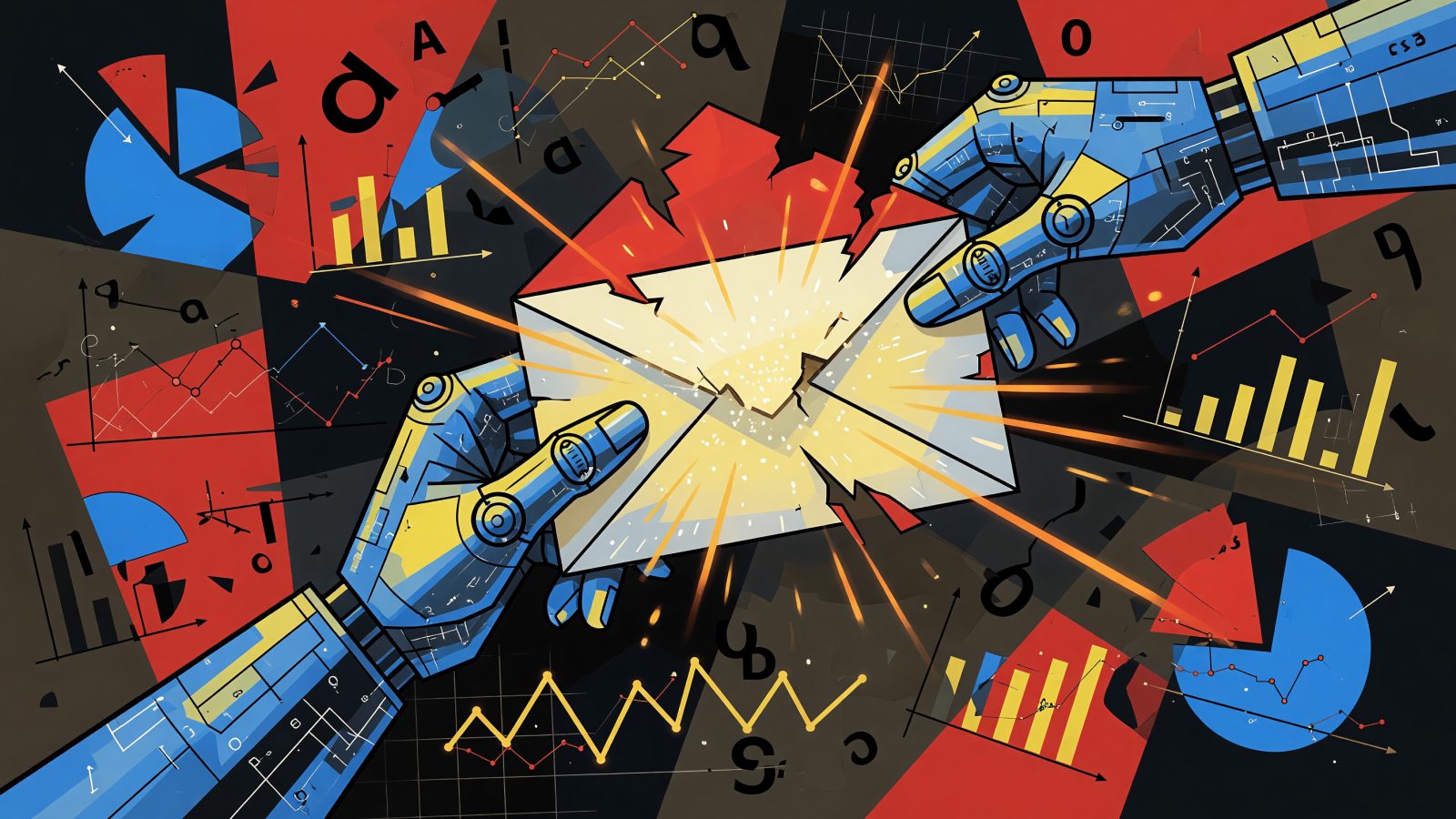
You’ve been staring at the same subject line for fifteen minutes. Does “Your weekly update” feel flat? Maybe you should punch it up with an emoji. Or add urgency. Or scrap it entirely and start over. This is email marketing by gut feel — and it’s costing you opens, clicks, and revenue. Marketers who consistently A/B test see 37% higher ROI, according to Litmus, but only 22% test regularly. The rest of us guess.
AI email copy scoring changes that equation. Instead of relying on intuition or waiting days for test results, you run your draft through a model trained on millions of high-performing emails. It analyzes readability, emotional tone, urgency signals, personalization depth, and call-to-action clarity — then spits out a predictive score and specific fixes. One SaaS company sent a product launch email that pulled a 1.2% click-through rate. They ran the same copy through an AI scorer, revised two paragraphs based on the feedback, and watched CTR jump to 2.8%. No list changes. No new offer. Just better words, validated by data.
That’s the gap AI scoring fills. It turns copy optimization from a subjective art into a repeatable process — something a solo marketer or small team can execute in minutes, not days.
Under the Hood: How AI Email Copy Scoring Models Work
Most scoring engines evaluate your copy across five dimensions. Readability metrics like Flesch-Kincaid grade level and average sentence length determine whether your email scans well on mobile. Emotional valence and arousal — measured through NLP sentiment analysis — map whether your tone builds trust or triggers anxiety. Urgency and scarcity detection flags words like “expires,” “limited,” or “only.” Personalization depth checks for merge tags, dynamic content blocks, and behavior-based references. CTA clarity scores verb strength and specificity.
The underlying tech typically combines rule-based checks with deep learning. A model like GPT-4 or BERT gets fine-tuned on proprietary datasets of emails with known performance outcomes. It might flag a subject line over 50 characters (rule-based) while simultaneously evaluating its emotional profile against your campaign goal (deep learning). Tools like EmailFlow AI’s Scorer, Phrasee, and Persado offer this as a pre-built integration with major ESPs.
Here’s a concrete example. An abandoned cart email with the subject line “Your items are waiting” scores 62 out of 100. The AI flags low urgency and no incentive. It suggests: “Your cart expires in 2 hours — claim your 10% off now.” That variant scores 91. The difference? Two specific triggers the original missed.
AI scoring isn’t perfect. Sarcasm, highly creative copy, and brand-specific jargon can confuse models. The score is a guide, not a dictator — use it as a second opinion, not a replacement for human judgment.
Key Metrics That Predict Email Conversion — and How AI Scores Them
Readability comes first. A dense, 80-word paragraph scores 40. Break it into three bullets with 12-word sentences, and the score hits 85. AI scoring engines often incorporate Hemingway-style analysis to flag passive voice and complex phrasing.
Emotional tone is trickier. The AI maps your copy on an arousal-valence grid. Too much negative emotion — aggressive fear-based urgency — can erode trust in relationship-building sequences. A balanced profile mixing excitement with reassurance typically scores higher for welcome series and nurture emails. You’ll often see a tone graph overlay showing exactly where your language lands.
Personalization gets quantified ruthlessly. “Dear Customer” scores 30. “Hi [First Name], we noticed you browsed [Product]” with a tailored recommendation jumps to 75 or above. The AI counts dynamic fields, behavior references, and segment-specific language.
CTA clarity looks at verb strength, specificity, and positioning. “Learn More” scores low — it’s vague, passive. “Get My Free Template” scores high, especially paired with “Today Only.” The best tools evaluate whether your CTA language matches the email’s core promise.
These individual scores feed into a composite — often weighted by campaign type. A flash sale email might weight urgency at 30% and readability at 10%. A win-back sequence flips those priorities. Good platforms let you customize the weights.
Integrating AI Scoring into Your Email Workflow
Start by picking a tool that integrates with your ESP. EmailFlow AI plugs into Mailchimp, Klaviyo, and HubSpot with one-click setup. As you draft, the scorer runs in real-time, showing a total score, metric breakdown, and underlined text with improvement suggestions.
Your workflow shifts slightly. Draft as usual, then run the scorer. If urgency sits at 45, the AI might suggest adding a countdown timer or limited-quantity language. Test three AI-generated alternatives, re-score, and pick the winner.
Set a minimum score threshold as a quality gate. Any email below 70 gets flagged for manual review. Above 80, it sends automatically. This prevents analysis paralysis while catching weak copy before it hits inboxes.
Track performance over time. A weekly report comparing scored emails against actual open and click rates reveals correlation patterns. Over months, you’ll see which metrics most predict conversion for your specific audience — and refine your internal writing guidelines accordingly.
Preserving Your Brand Voice While Letting AI Optimize
The fear is real: AI scoring will homogenize every email into the same chipper, urgency-laden template. It doesn’t have to.
Most advanced tools support a brand voice overlay. You upload tone-of-voice examples or brand guidelines, and the AI adjusts its suggestions. A luxury brand’s cart recovery email might score low on urgency because it avoids pushy language. The AI learns to suggest “Exclusive piece may sell out soon” instead of “BUY NOW!” — boosting the score while preserving elegance.
In EmailFlow AI, you can define approved word lists. “Curated” over “crazy deals.” “Thoughtfully designed” over “top-rated.” The scoring model then recommends vocabulary that reinforces your voice rather than erasing it.
Keep a human in the loop. AI provides data and options. You make the final call. Ignore suggestions that feel off-brand. Over time, the model adapts to your preferences — especially if you flag rejected recommendations.
Measuring the Impact: From Scores to Dollars
One e-commerce brand ran AI scoring across all campaigns for six months. Average click-through rate climbed from 3.1% to 4.9%. Revenue per email rose from $0.18 to $0.30. The lift came from systematic, score-driven improvements — not one-off wins.
Tying AI scoring to ROI is straightforward. If the tool costs $99 per month and your email revenue increases by $800, the math works. ESPs like Klaviyo show revenue per recipient, making it easy to isolate the effect of copy changes.
Use AI to generate high-scoring variants for A/B tests. Instead of testing random subject lines, let the scorer surface the top three — then test those against your original. This narrows the test surface to meaningful improvements and increases win rates.
AI email copy scoring isn’t a magic wand. It’s a feedback loop. Run your copy through it. Learn what your audience responds to. Get better with every send. The tools are ready — and the marketers using them are already pulling ahead.
Keep reading
AI-Powered Email Marketing for Influencers: Automate Fan Engagement and Sponsorship Deals
AI-Powered Email Cross-Sell Automation: Turn One Purchase into a Bundle of Revenue