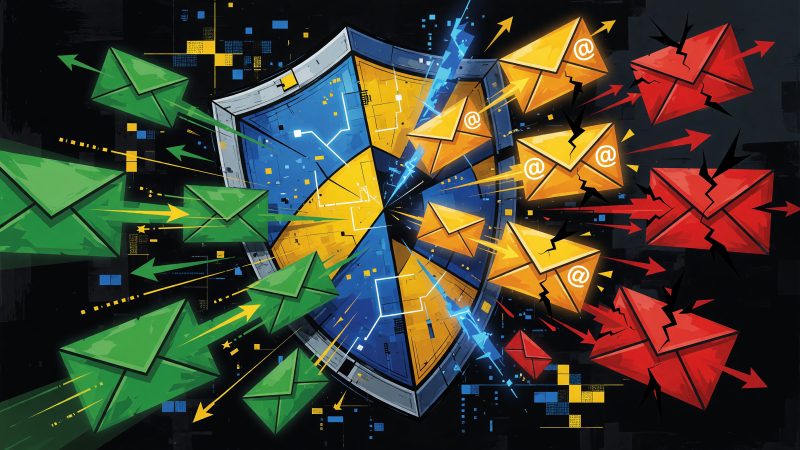
AI-Powered Email Gamification: Automate Interactive Games That Skyrocket Engagement
You’ve seen the numbers. Static emails are flatlining while interactive ones pull 30-40% higher click rates and a 20% conversion boost. The problem? Building a spin-to-win wheel or a personalized quiz took hours of design, custom code, and testing across clients. For most SMBs and lean marketing teams, it wasn't worth the headache. That’s exactly why ai email gamification changed the game. AI now does the heavy lifting—recommending the right game type, generating the mechanics, tracking every interaction in real time, and weaving it all into your existing ESP. No developers needed. Just smarter, more human emails that people actually want to click.
Why AI Email Gamification Is No Longer Optional
Gamification isn’t a gimmick. 93% of marketers say interactive content grabs attention better than static, and brands who embed games directly inside emails see open-to-click jumps that make plain-text campaigns look prehistoric. The old way, though, meant wrestling with AMP HTML, CSS fallbacks, and prize probability math that could break your margins. For a growth marketer with 15 other things to finish by Thursday, that wasn’t scalable.
That’s where ai email gamification shifts from buzzword to lifeline. AI-powered platforms now analyze your campaign objective—say, list growth or zero-party data capture—and your audience segment, then automatically suggest a game format that fits. They build the interactive component, test it across 90+ email clients, and wire it into your flow. The result: you launch a spin-to-win for a welcome series in minutes, not weeks, and the data pours back in your reports.
The stats keep stacking up. Zembula’s latest data shows gamified messages lift click rates 30–40% on average. Demand Metric confirms that 93% of marketers see meaningful engagement jumps with interactive content. But the real shift is accessibility. Suddenly, a two-person marketing team can run campaigns that used to require a full engineering squad.
Let AI Pick the Perfect Game for Your Audience
You’re not guessing anymore. AI email gamification tools like Zembula, Mailmodo, and Litmus Personalize take your campaign brief—say, “re-engage lapsed users with a 10% off coupon”—and cross-reference it with your audience’s behavior. The algorithm might see that this segment responds best to a scratch card, not a quiz. So it pulls a scratch-card template and even adjusts the difficulty: VIPs get an instant win, while newer subscribers see a 30% chance, nudging them to interact.
Behavioral triggers make it sharper. A customer browses three product pages, leaves, and then opens your email. The AI detects the intent gap and embeds a personalized quiz right there: “Find your perfect fit” with product images pulled from their browsing history. A correct answer earns a dynamic discount. Tools like Mailmodo’s AI assistant literally read your email copy and goal, then serve up the highest-performing interactive template from its library. You click, tweak the colors, and ship.
Predictive analytics play a role, too. The AI might forecast that a progress bar for a loyalty program will keep your top 20% spenders hooked, while a simple wheel appeals to brand-new subscribers who need a quick dopamine hit. Instead of one-size-fits-all, you run a multi-variant campaign where each segment gets a game tailored to their psychology. The system monitors which version performs better and automatically shifts traffic—no manual A/B setup.
Auto-Generate Game Mechanics and Prize Logic Without Code
Remember the spreadsheet nightmare of setting win probabilities so you didn’t give away the farm? AI handles it. You set a total prize budget—say $500—and tell the tool you’re sending to 10,000 people. It then auto-distributes rewards: 500 people get a $5 voucher (5% win rate), 10 get a $50 gift card (0.1% chance), and the rest see a “better luck next time” CTA. The algorithm safeguards margins and can even adjust in real time if a campaign overperforms.
Personalization scales from there. Using CRM fields like loyalty tier, past purchases, or location, the AI swaps game themes and prize inventories per recipient. A platinum-member email might show a holiday spin-wheel with chances for premium items; a first-time buyer sees a simpler version with a guaranteed small discount. All of this assembles automatically as the email renders. Platforms like Dyspatch and Stripo then push the finished AMP email—with fallback images baked in—into HubSpot, Marketo, or Salesforce Marketing Cloud with one click.
Take a SaaS company fighting churn. They set up a progress bar that fills as users complete onboarding steps. AI tracks each user’s actions and updates the bar dynamically within the email. Complete three steps, and you unlock a free month. The campaign reduced churn by 15% in six weeks. No hand-coded logic. No conditional statements. Just the AI watching behavior and triggering the next animation.
Track, Analyze, and Automate Follow-Ups in Real Time
Every spin, scratch, and quiz answer flows back into your ESP instantly. That means you can segment users on the fly: anyone who won but hasn’t redeemed gets a 1-hour reminder with a countdown timer. Those who played and lost might receive a follow-up with a gentle nudge and a smaller consolation offer. All triggered by the AI, keeping the conversation alive without you building a dozen separate flows.
The metrics matter. Look at engagement rate (unique interactions divided by unique opens), conversion rate from game to purchase, volume of zero-party data collected, and revenue lift per gamified send. Zembula and Mailmodo dashboards show you side-by-side comparisons: a typical gamified email outperforms static by 25% higher click-to-open rate. That’s not marginal. That’s your Friday afternoon ROI report writing itself.
A/B testing becomes automatic too. You might ask the AI to test a spin-to-win wheel against a scratch card for a re-engagement campaign. It splits the audience, runs both, and declares a winner when statistical significance hits—cutting analysis time from days to hours. You’ll learn that scratch cards win for discount-seekers, while quizzes lift order value in product-discovery sequences. AI email gamification doesn’t just build the games; it learns which game works best for each moment, then doubles down.
Ensure Every Subscriber Can Play: Fallbacks and Accessibility
Interactive emails break in Outlook. That’s reality. But ignoring those users isn’t an option—they’re often your highest-value B2B contacts. AI tools solve this by auto-generating a static fallback: an animated GIF of the game with a bright CTA button that leads to a web-hosted version. The recipient clicks the image and lands on a perfectly rendered game page. Engagement doesn’t tank; it just shifts channel, and the AI tracks it all.
For Gmail and Mail.ru, where AMP for email is supported, the live game renders in situ. Litmus and Dyspatch build the AMP structure, while the AI inserts the interactive elements and ensures graceful degradation. Accessibility gets baked in, too. The game elements come with proper alt text, keyboard-navigable quiz options, and high-contrast colors that meet WCAG standards. No more worrying that you’re excluding a chunk of your list.
Pre-send testing used to eat hours. Now, AI-driven preview tools like Litmus or Email on Acid scan the gamified email across 90+ clients automatically and flag broken layouts. They even suggest fixes—move a button, adjust padding—slashing QA time by 70%. A retailer’s spin-to-win campaign once looked flawless in Gmail’s AMP but broken in Outlook’s dark mode. The AI spotted the contrast issue and proposed a fix before the send. Result: a 40% engagement lift across all clients because nobody got a broken experience.
Building gamification into your emails used to mean choosing between interactivity and reliability. AI killed that compromise. You get both—automatically. And the data doesn’t just measure clicks; it feeds back into your segmentation, your product recommendations, and your revenue goals. So whether you’re trying to cut your welcome-series unsubscrib rates or turn a dead list into a sales channel, ai email gamification hands you the playbook. No more excuses about coding. Just pick your goal, tell the AI your budget, and watch people actually enjoy opening your emails again.
Keep reading
AI-Powered Email Cross-Sell Automation: Turn One Purchase into a Bundle of Revenue
AI-Powered Email Recency-Frequency-Monetary (RFM) Segmentation: Automate Hyper-Personalized Campaigns That Maximize Customer Lifetime Value