
AI-Powered Email Marketing for Ecommerce: Automate Personalized Campaigns Across All Platforms
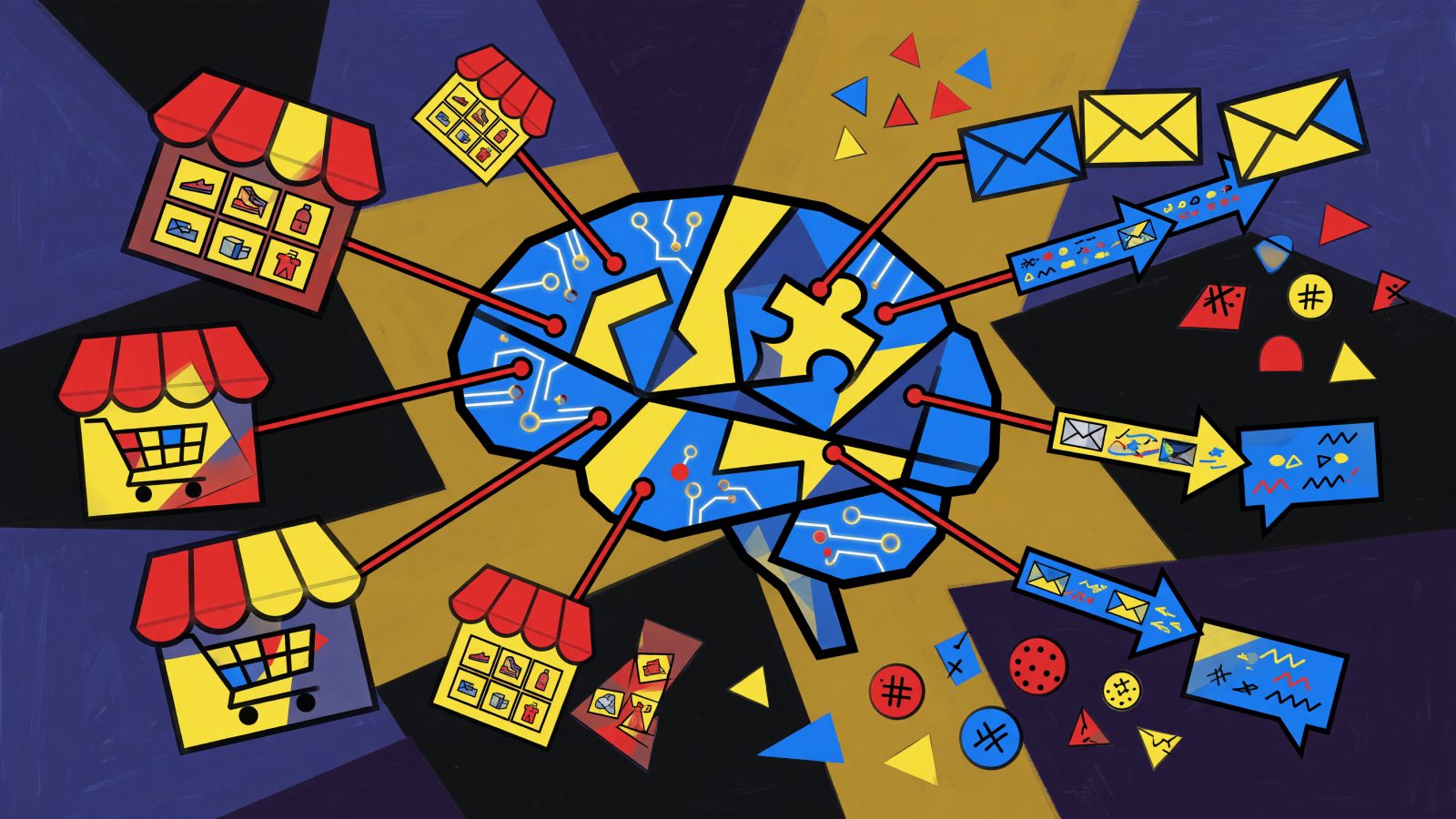
Email marketing for ecommerce used to be a manual grind. You'd export a CSV from Shopify, slice it by purchase history, and build a campaign that was already stale by the time it landed. Then you'd do it again next week. AI changed that. Now machine learning models pull real-time data from platforms like WooCommerce, BigCommerce, and Magento, predict what each customer will do next, and trigger hyper-personalized emails without you touching a rule. The result isn't just saved time—it's a 20% lift in sales and 30% higher engagement, according to McKinsey and Emarsys. And for brands that lean into AI-driven product recommendations, average order value jumps 10–15%. This is the shift from manual to predictive, and it’s the backbone of effective ai email marketing ecommerce today.
Understanding the Shift from Manual to Predictive Campaigns
Traditional email automation is rule-based: “if a customer bought X, send Y.” That works until it doesn’t. A customer who browsed premium jackets five times in two days gets the same generic promo as someone who visited once and bounced. AI replaces those static rules with models that score purchase intent, churn risk, and predicted customer lifetime value (CLV) in real time.
Take a fashion retailer on Shopify. They integrated Rebuy, an AI personalization engine, to predict each visitor’s next likely purchase. When a shopper browsed dresses but didn’t buy, the system sent an email the next morning with three specific styles—not just a category grid—and included a real-time inventory count. Click-through rates jumped 25%. That kind of precision is impossible with manual segmentation.
Platforms like Klaviyo, Omnisend, and Mailchimp now bake predictive models directly into their automation. Instead of building a cart recovery flow from scratch, you turn on a pre-built AI sequence that picks the best send time, subject line, and discount threshold per recipient. Setup time drops by 80%. And because the models learn from your store’s actual data—not averages—they get smarter every week.
Unifying Ecommerce and Email Data for a 360-Degree View
None of this works if your data lives in silos. AI models need a clean, unified stream of product catalog details, purchase history, browsing behavior, and email engagement signals. That means connecting your ecommerce platform (Shopify, WooCommerce, BigCommerce, Magento) to your ESP (Klaviyo, Braze, HubSpot) through native integrations or middleware like Segment or Census.
A home goods store on BigCommerce used Segment to capture every product view, add-to-cart, and purchase event, then routed that data to Braze. Their AI model built a dynamic segment: “high-intent visitors who viewed sofas 3+ times in 24 hours but didn’t buy.” That segment received a targeted email with a limited-time free shipping offer the next morning. Recovery rate: 17%.
Without this integration, you’re flying blind. Forrester found that 60% of email personalization efforts fail because of poor data quality. If your product feed isn’t syncing in real time, the email might recommend an out-of-stock item. If browsing events lag by hours, the moment of intent is gone. Tools like Peel Insights or Glew can pull ecommerce data into AI models for predictive scoring, but the pipeline has to be tight. Real-time server-side tracking (like Shopify’s Customer Privacy API) is worth the engineering investment.
Predictive Segmentation and Real-Time Personalization
Old-school segments group people by demographics or past purchases. AI segments on behavior that’s happening right now: recent product views, time since last order, predicted next order date, and even price sensitivity. These aren’t static lists; they update every time a customer interacts with your store.
Klaviyo’s predictive analytics, for instance, give every contact a churn risk score and an expected next order date. Omnisend auto-assigns customers to lifecycle stages. Bluecore scores product affinity based on browsing patterns. A beauty brand used these signals to flag “likely to churn” customers—no purchase in 90 days, low email engagement. The AI triggered a win-back email with a personalized discount on the category they browsed most. Result: 15% of at-risk customers came back.
The real magic is in the email content itself. AI dynamically fills subject lines, hero images, and product grids based on what that specific recipient responds to. Persado optimizes subject line language; Movable Ink injects live content like countdown timers or location-specific offers. Litmus found that real-time personalization can boost email revenue per recipient by up to 30%. When a customer opens an email and sees the exact boots they left in their cart, plus a note that only 2 pairs remain in their size, it’s not creepy—it’s helpful. And that’s what ai email marketing ecommerce delivers at scale.
Automating Core Ecommerce Email Flows with AI
Every ecommerce brand runs a handful of essential flows. AI makes each one smarter.
Welcome series. Instead of a one-size-fits-all email, AI reads the acquisition source. A visitor who clicked an Instagram ad for a specific sneaker gets a welcome email featuring that sneaker plus complementary items (socks, cleaner). Conversion rises 20% because the first touch feels personal.
Browse abandonment. AI identifies products viewed but not purchased and sends an email within 1–2 hours. Barilliance and Rejoiner add real-time availability and social proof (“14 people bought this today”). An electronics retailer recovered 12% of abandoned browsers by including a personalized price drop alert for price-sensitive shoppers.
Cart recovery. The AI predicts the optimal send time and discount amount per user—not a blanket 10% off. For a customer who consistently buys full-price, it might just send a reminder. For a deal-hunter, it offers free shipping instead of a discount to protect margins. Klaviyo’s Smart Send Time boosts open rates 15% on these emails.
Post-purchase cross-sell. After a purchase, AI recommends products based on what similar customers bought. “Customers who bought this camera also bought a lens and memory card.” Repeat purchase rate climbs 25%.
Win-back campaigns. AI segments lapsed customers by predicted CLV. High-value customers get premium incentives (a $20 gift card). Low-CLV customers get a soft re-engagement or are suppressed entirely to avoid list fatigue. This preserves deliverability and margin. Every one of these flows runs on autopilot, continuously optimizing, which is the core promise of ai email marketing ecommerce.
Measuring ROI: Predictive CLV, Churn, and Attribution
You can’t improve what you don’t measure, and AI gives you metrics that matter. Predictive CLV and churn probability per segment let you allocate spend where it’s most profitable. Optimove’s CDP calculates these scores; Gartner reports that AI-driven CLV models improve marketing ROI by 20–30%.
Attribution gets an upgrade too. Last-click models miss the full picture. Multi-touch attribution tools like Triple Whale or Northbeam integrate email data to show that browse abandonment emails contribute 30% of total email revenue, even though their click rates are modest. An apparel brand discovered exactly that and doubled their investment in that flow, adding $50k in monthly revenue.
Finally, run holdout groups. Suppress 10–15% of your audience from AI-personalized emails and send them a generic version. AI typically drives 2–5x higher revenue per send. It also optimizes send frequency per user, cutting unsubscribes by 25% and improving inbox placement. When you tie these gains back to platform revenue, ai email marketing ecommerce stops being a buzzword and becomes a line item you can defend.
The tools are ready. The integrations exist. The data is already flowing through your store. Start with one flow—cart recovery, maybe—and let the AI learn. Then watch it quietly compound revenue while you focus on the next big thing.
Keep reading
AI-Powered Email Marketing for Influencers: Automate Fan Engagement and Sponsorship Deals
AI-Powered Email Cross-Sell Automation: Turn One Purchase into a Bundle of Revenue