AI-Powered Email Marketing for SaaS: Automate the Entire Customer Lifecycle from Trial to Expansion
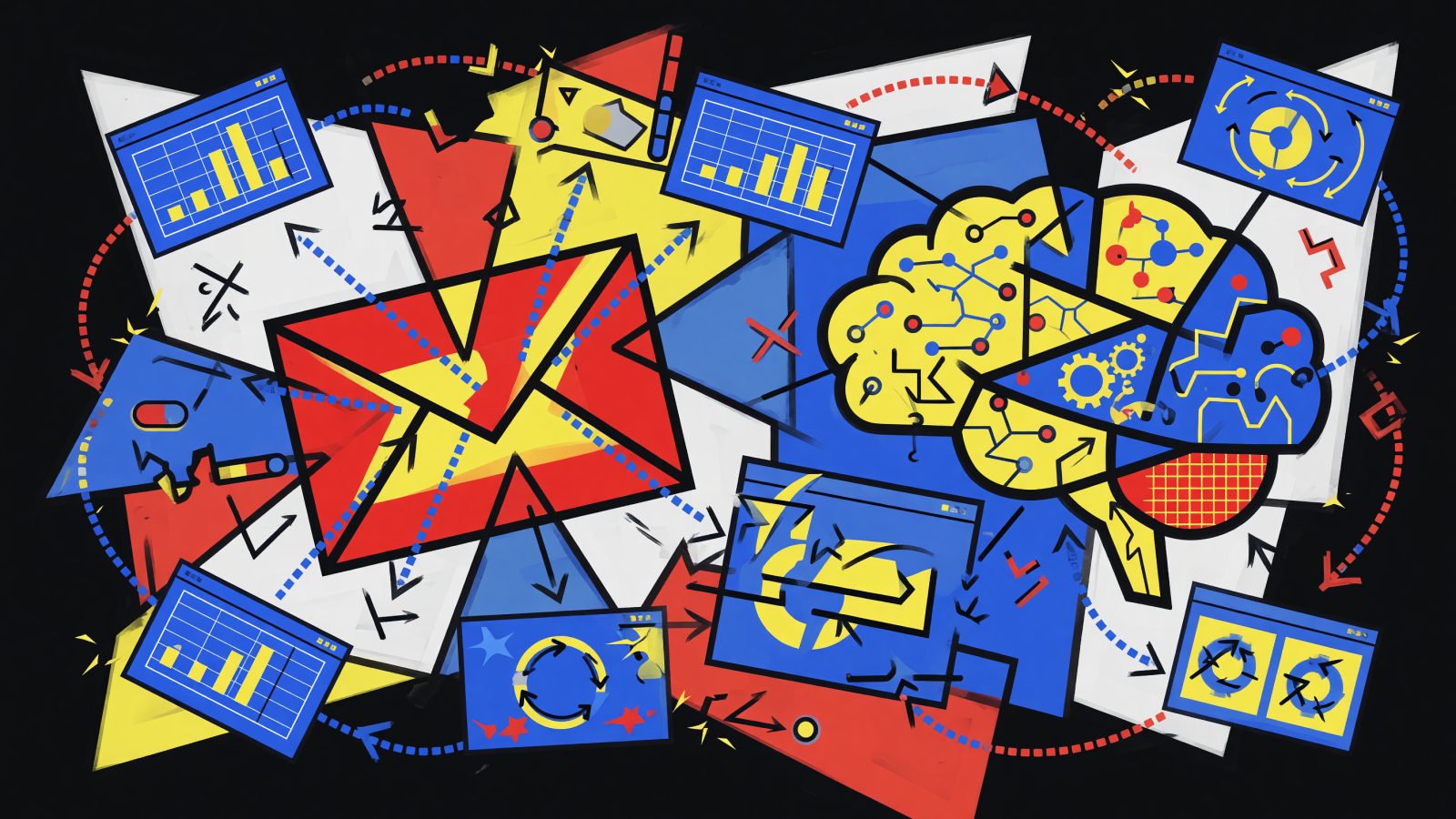
Email marketing for SaaS has always been a grind. You connect a dozen tools, define a hundred segments, and still end up with generic blasts that feel like they were written for someone else. But that’s changing fast. AI is now stitching together product analytics, billing data, and support tickets so you can trigger hyper-personalized emails at every stage of the customer journey—trial, adoption, upsell, and even win-back—without manually building a single segment. Here’s how to build an ai email marketing saas engine that actually works.
The AI Email Stack: Connecting Your SaaS Tools for Lifecycle Automation
You can’t automate the lifecycle if your data lives in silos. Start by piping in-app events from your product analytics (Mixpanel, Amplitude) into your email platform (Customer.io, Braze) via webhooks or native connectors. That gives you real-time behavioral triggers. Next, sync subscription data from Stripe or Chargebee to dynamically segment users by plan, MRR, and billing cycle. Tools like Census or Hightouch unify this with your CRM for a single customer view, and AI middleware like Faraday can score leads and predict lifecycle stages—trial, active, at-risk—right inside your email tool. No more CSV uploads.
Don’t forget the human signals. Integrate NPS tools (Delighted) and support tickets (Zendesk, Intercom) so AI can catch sentiment shifts. A ticket marked “urgent” or an NPS score below 6 can trigger a personalized check-in email instantly. Finally, use reverse ETL to push email engagement data back into your product analytics. Mark users who clicked a feature adoption email as “engaged” in Amplitude, and your AI models get smarter every loop. That’s the foundation for ai email marketing saas that learns.
Onboarding: From Trial Sign-Up to First Value with AI Personalization
Generic welcome emails kill activation. AI changes the game by analyzing sign-up source and firmographics—Clearbit enrichment can tell you someone is a marketing manager at a 50-person company versus an enterprise developer—and tailoring that first email accordingly. Then, trigger a dynamic sequence based on product-qualified actions. If a user creates their first project within 24 hours, skip the tutorials and send a “power user” path with advanced tips. If they stall, nudge them with a video walkthrough from a similar company, using in-app guidance tools like Appcues.
Natural language generation (NLG) from platforms like Persado can write subject lines and body copy that reference actual behavior: “You just built your first dashboard—here’s how to share it.” AI also optimizes send time and language. It detects the user’s location, schedules the email for 10 a.m. local time, and translates content via DeepL for global SaaS products. The impact is real. Companies like Canva saw a 30% increase in first-week retention by personalizing onboarding emails based on the template a user first selected. That’s the power of ai email marketing saas applied to early activation.
Feature Adoption: Triggering Emails Based on In-App Behavior
Feature adoption campaigns often feel like guesswork. Instead, define key events (e.g., “exported report,” “invited teammate”) in your analytics and pipe them to your email platform. When a user hits 80% of the adoption threshold but stops, AI sends a contextual nudge with a GIF demo. Predictive models take it further: train on past adopters’ behavior—say, logged in 5+ times and visited settings—and use MadKudu to target lookalikes with a campaign for the new feature.
A/B testing can run on autopilot. Tools like Anyword generate multiple email variations, send to segments, and auto-optimize for click-throughs without you lifting a finger. Integrate your knowledge base, too. If a user searches “how to set up API” in your help center (Intercom Articles) but doesn’t finish the article, trigger an email with that exact link and a CTA to book a 1:1 call. For monthly releases, AI segments users by feature usage history and sends a “What’s new” digest only to those who’ll find it relevant—one company cut unsubscribe rates by 40% that way. You’re not just promoting features; you’re being helpful at the exact moment of need.
Usage-Based Upsells and Expansion: AI-Powered Revenue Growth
SaaS revenue grows when customers outgrow their plan. Monitor usage metrics—API calls, storage, seats—via tools like Metronome or Amberflo. When a user consistently exceeds 80% of their limit for two weeks, AI triggers a personalized upgrade email that includes a cost-savings calculator. Combine product usage with external growth signals to score accounts for expansion. Crunchbase data on a funding round, or LinkedIn insights showing new hires, can identify accounts ripe for an upsell. Automate an email with a tailored ROI case study.
Dynamic pricing offers make the ask even smarter. AI analyzes the user’s historical willingness to pay (from past negotiations or survey data) and generates a unique discount or annual incentive right in the email, delivered via RightMessage. Cross-sell emails work similarly: if a user heavily uses project management but ignores time tracking, send an email showing how the two integrate, with a one-click trial activation—companies using Harvest have seen a 20% attach rate. And when a single user invites colleagues from different teams (via SSO logs), AI detects the pattern and sends the admin a “Team Plan” email with bulk pricing. That’s ai email marketing saas turning usage data into revenue, automatically.
Churn Prevention: Predictive Emails That Save At-Risk Customers
Churn prediction is where AI really shines. Build a model using historical data: login frequency, feature usage decline, support ticket sentiment, and payment delays. Platforms like DataRobot or Pecan spit out a risk score. When it crosses a threshold, trigger a re-engagement email. For users who visit the cancellation page (tracked via product analytics), immediately send a personalized save offer—a 15% discount or a free strategy session—but only if the predicted LTV justifies it, using Optimove to guard margins.
Negative NPS feedback demands instant action. Integrate Delighted with your email platform. When a detractor submits a score, AI generates a follow-up from the CEO addressing their specific complaint and offering a direct line to support. Sentiment analysis on support tickets catches frustration early: if a ticket’s language says “still not working” or “frustrated,” trigger an immediate apology email with an account credit or fast-track to senior support. One case study saw a 15% reduction in churn from that alone. For already-churned users, AI analyzes their past feature usage and sends a “We miss you” email showcasing new features they’d love, plus a reactivation offer—Slack reports a 10% reactivation rate using this tactic. Ai email marketing saas isn’t just about sending more emails; it’s about sending the right intervention at the right moment.
The whole point of connecting your SaaS tools with AI is to stop treating every user like they’re on the same journey. When your email platform knows what a user did in your product, how much they pay, and even how they feel, your campaigns stop being blasts and start being conversations. You can automate the entire customer lifecycle—from that first login to the expansion deal—without a team of 10 manually building segments and copy. Start with one integration, maybe behavior-triggered onboarding. Measure the lift. Then stack on predictive churn prevention or usage-based upsells. The tools are ready. The data’s already there. You just need to connect the dots.
Keep reading
AI-Powered Email Marketing for Financial Advisors: Automate Personalized Client Communications and Market Updates
AI-Powered Email Multivariate Testing: Automate Complex Experiments to Uncover Hidden Conversion Levers