
AI-Powered Email Marketing Strategy: Automate Your Quarterly Campaign Roadmap for Maximum Impact
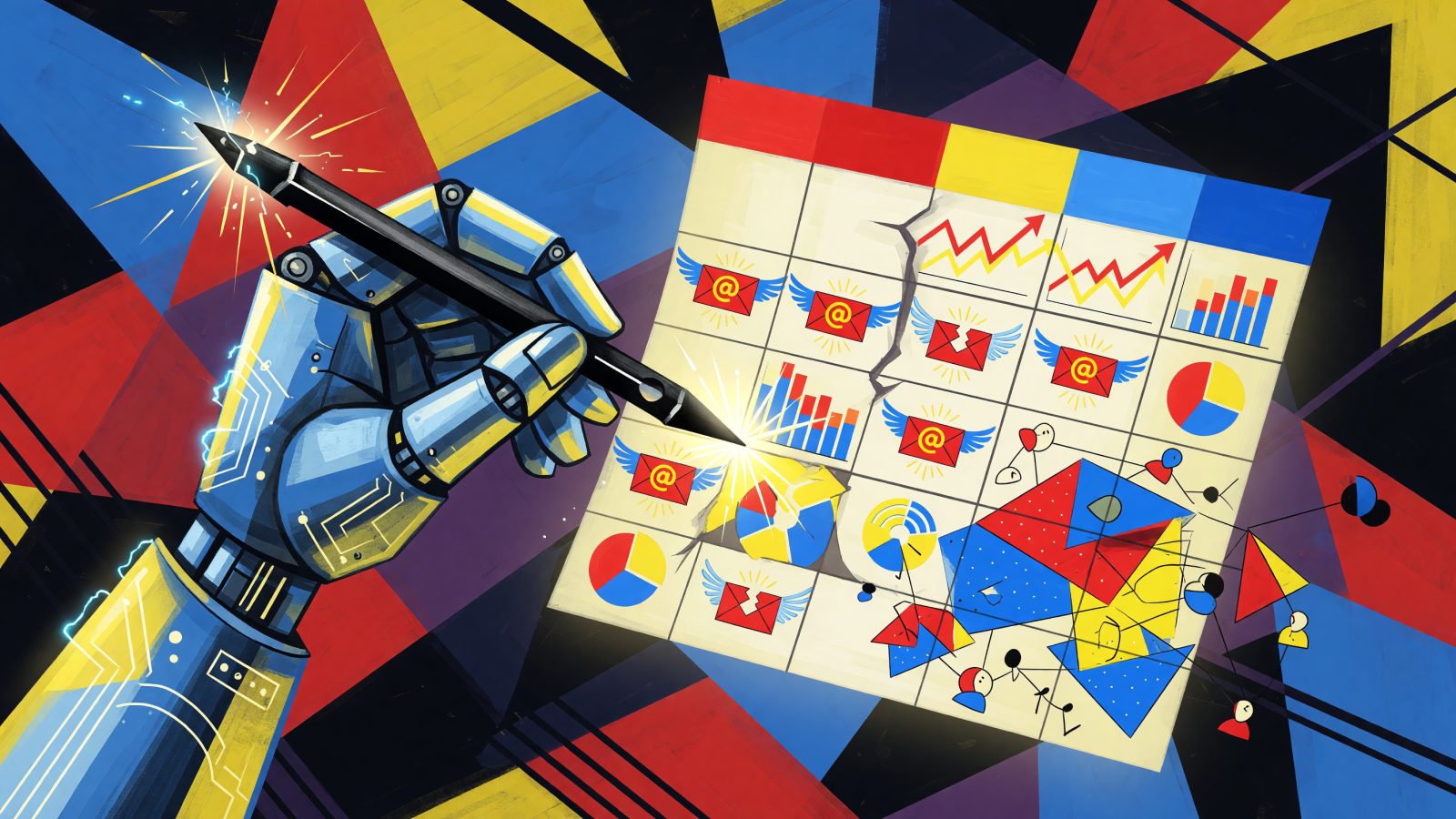
You know the drill. Quarter-end planning calls that eat a week of your life: endless spreadsheets, campaign performance reports, Excel pivot tables you swear you'll never touch again. And then you still guess on send times and hope the mix of promos and educational content doesn't nuke your unsubscribes. An AI email marketing strategy tool flips that. Instead of 40-plus hours of manual analysis, you upload your last 12 months of ESP data—say, from Mailchimp or Klaviyo—and watch it build a quarterly roadmap in minutes. It pulls open rates, click-through rates, conversions, and overlays industry benchmarks and seasonal patterns. One B2B SaaS marketer I know dumped a year of Mailchimp data into EmailFlow AI's Strategy Generator. The AI spotted a clear winner: product demo emails sent Tuesdays at 10 a.m. converted 25% higher than any other slot. Those demos got locked into the calendar automatically. No hunches, no debates.
The AI's roadmap isn't random. It cross-references your business goals—like shifting focus from pure lead gen to retention this quarter—with seasonal spikes (Q4 budget flush, Black Friday) and proposes a content cadence: 40% educational, 30% promotional, 20% re-engagement, 10% transactional. Then it attaches concrete KPI targets per campaign. Not generic "improve open rates," but "22% open rate, 3.5% click rate" based on your own historical averages nudged up against vertical benchmarks from the latest Campaign Monitor report. You get an instant, data-backed playbook.
Building Your AI-Generated Content Pillars and Segmentation Rules
Segment definitions used to be a manual, your-best-guess exercise. AI digs into actual behavior to build dynamic groups that match your quarterly goal—say, increasing customer lifetime value by 15%. It creates "VIP customers: purchased 3+ times in 90 days" and "at-risk subscribers: no opens in 60 days," then assigns tailored content pillars to each.
The pillars get themed automatically. Engaged leads see "Product Deep Dives." Mid-funnel contacts get "Customer Success Stories." Lapsed buyers receive "Win-Back Incentives." With that, the AI proposes a send frequency matrix: VIPs get 2 emails per week, active subscribers 1 per week, and re-engagement segments just 1 every 10 days—designed to keep spam complaints below 0.1% and protect deliverability.
Because the tool integrates with ESPs like Klaviyo or HubSpot, it also pulls in real-time purchase signals. An abandoned cart series or a post-purchase upsell flow slots right into the roadmap alongside planned campaigns, not as an afterthought. If you need to override a suggestion, you can. Swap a generic "Summer Sale" pillar for your brand-specific "Founder’s Favorites" curation; the underlying segmentation logic stays intact. The AI handles the math, you keep creative control.
Testing Plans and Optimization Loops: AI as Your Continuous Strategist
Your roadmap shouldn't be static. AI embeds A/B tests directly into the calendar, pre-selecting variables that matter. Say you run a fashion retailer: the AI schedules a subject line test in Week 2, pitting "New Arrivals Just Dropped" against "Your Exclusive Lookbook Awaits." Based on past wins, it predicts a 12% open-rate uplift for the lookbook version, so you launch with confidence.
The AI also monitors real-time performance and suggests mid-quarter corrections. If a re-engagement campaign opens under 8%, it alerts you and recommends shifting budget toward a welcome series that's already hitting 35% open rates. Budget allocation becomes fluid. The initial plan might earmark 60% of resources for acquisition, but if retention KPIs dip, the AI reallocates 20% to loyalty emails and projects the ROI impact. You're not locked into February's plan when March data says pivot.
Integrating AI Strategy with Your Existing Tech Stack
All this hinges on clean connections. EmailFlow AI links to Mailchimp, ActiveCampaign, or Salesforce Marketing Cloud via API, pulling historical data and pushing the final roadmap back out as a synced calendar in Asana or Trello. For analytics platforms like Google Analytics 4 or Mixpanel, the AI imports conversion goals and revenue data so the strategy aligns with omnichannel targets—like hitting $50K in email-attributed revenue for Q2.
Compliance checks run automatically. The AI cross-references segments against GDPR and CAN-SPAM rules, flags unsubscribed contacts, and updates suppression lists. You're never sending to people who shouldn't receive a message. A Shopify marketer using Klaviyo, for instance, sees the AI-generated roadmap auto-populate in Klaviyo's campaign calendar with tags for product launches and post-purchase upsells. No CSV imports, no manual calendar entries.
From Roadmap to Agile Weekly Sprints: Execution with Confidence
A quarterly roadmap is huge. Break it into 12 weekly sprints, each with a tight theme like "Sprint 3: Lead Magnet Promotion." The AI goes further and drafts copy, suggests visual templates, and recommends send times. Then it ranks every campaign by predicted revenue impact. Your team tackles a webinar invite projected to generate $15K in pipeline before a lower-scoring newsletter, no arguments.
Daily stand-ups get an AI-powered "Sprint Health" dashboard. It shows real-time opens, clicks, and conversions against targets and flags any campaign deviating more than 10% from its goal. At the end of each sprint, the AI compiles a lessons-learned report: "Subject lines phrased as questions outperformed statements by 18%," and feeds that insight into the next quarter's strategy generation. Teams using EmailFlow AI's Sprint Mode report cutting campaign build time in half because the AI pre-builds segments and populates content blocks in the ESP. A final human approval is all that's needed.
Preserving Brand Voice and Strategic Oversight in an AI-Driven Process
Handing over strategy to AI doesn't mean losing your identity. The tool learns your brand voice from uploaded style guides and past emails, but you still review for nuance. A playful brand might need to tone down a stuffy product announcement the AI drafts. Set brand guardrails inside the tool: ban certain phrases, cap emoji usage, or require a human sign-off for sensitive flows like cancellation emails.
Quarterly reviews stay human-led. The AI presents a draft roadmap, and you adjust based on real-world events—a competitor's surprise launch, a sudden PR moment—or just creative intuition. A healthy approach is to run a shadow period for one quarter, letting the AI's suggestions run parallel to your manual plans. Compare KPIs. When a luxury skincare brand did this, they let the AI handle segmentation and timing but kept manual crafting of storytelling emails. The result? A 30% higher engagement rate, blending AI speed with human creative spark.
An AI email marketing strategy doesn't replace your judgment. It gives you a running start every quarter, with the data already crunched, the tests already slotted, and the calendar already built. You spend less time planning and more time actually connecting with your audience.
Keep reading
AI-Powered Email Marketing for Influencers: Automate Fan Engagement and Sponsorship Deals
AI-Powered Email Cross-Sell Automation: Turn One Purchase into a Bundle of Revenue