AI-Powered Email Price Drop Alerts: Automate Smart Notifications to Recover Lost Sales
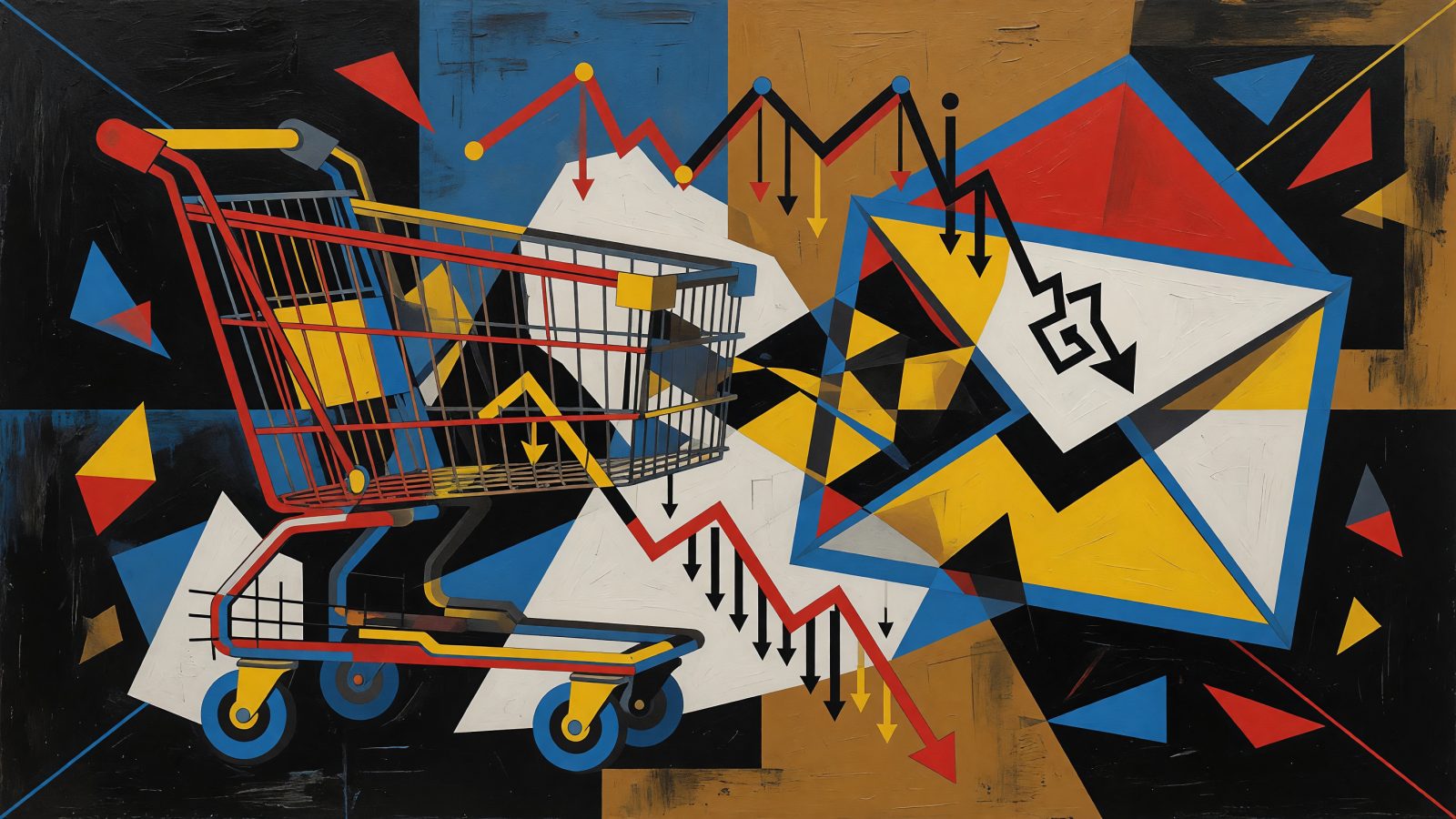
Here’s a scenario you’ve seen a hundred times. A shopper lands on your store, spends six minutes reading reviews for a $199 espresso machine, adds it to the cart, and then bails. Maybe shipping felt steep. Maybe they wanted a better price. Either way, they’re gone. Without a follow-up, that sale is dead. With AI email price drop alerts, you can bring a chunk of those shoppers back automatically.
Why Price Drop Alerts Are a Revenue Recovery Necessity
Roughly 70% of online carts get abandoned. Price concerns are one of the top reasons. A shopper doesn’t always tell you they’re waiting for a sale. They just leave. Triggered price drop alerts can recover 10–15% of those abandoned carts because they reach people at the exact moment the objection disappears.
Take that espresso machine. A shopper bails at $199. You don’t hear from them. Three weeks later, the price drops to $159. Without automation, they never know. With an AI-driven monitor, they get an email within hours: “The espresso machine you viewed is now $159.” That’s not a mass blast. It’s a one-to-one message.
The numbers make the case. Generic “sale” emails often see open rates around 18% and click-through rates near 2%. Personalized price drop alerts? Marketers report open rates closer to 45% and click-through rates around 10%. Amazon has trained shoppers to expect this with “Save for Later” price notifications. Shopify store owners can do the same using Klaviyo, Mailchimp customer journeys, or Omnisend triggers. The AI removes manual work: it scans your product feed hourly and watches for price changes you’d never catch on your own.
How AI Identifies High-Intent Shoppers and Price Thresholds
Not every visitor deserves a price drop email. If you alert everyone who viewed a product once, you’ll annoy people and spike spam complaints. AI fixes that by scoring intent. It looks at time on page, repeat views, cart adds, and wishlist saves. A score of 1 to 100 tells you who’s actually close to buying. Most teams only trigger AI email price drop alerts for shoppers above 70.
Here’s a real pattern. One user views the espresso machine three times in four days, adds it to the cart once, and leaves. That’s a 78. Another user views it once for 20 seconds and never returns. That’s a 12. You alert the first, not the second. That precision keeps your deliverability healthy.
AI also figures out the right price for each person. A blanket “10% off” alert won’t move someone who needs 20% off to buy. Tools like Klaviyo’s predictive analytics, Blueshift, and Dynamic Yield model each subscriber’s price sensitivity using past purchases and compare-at prices. Then they set a personal threshold. For one subscriber, any drop below $179 triggers an email. For another, the trigger only fires at $149. Marketers using dynamic thresholds report about 25% higher conversion rates than fixed-threshold campaigns.
Building Dynamic AI-Powered Email Content That Converts
The email has to feel like it was written for one person. Start with dynamic content blocks: the exact product image, original price, new price, savings amount, and maybe a countdown timer if the deal is short-lived. Add a personalized recommendation block if you have the data.
AI copy tools accelerate this. Jasper, Copy.ai, and Persado generate subject lines and body copy based on the shopper’s past engagement. A subject line like “Your $199 espresso machine is now $159, Sarah” usually beats a generic “Price drop alert!” Test emojis, test length, and let the AI learn which variant gets the open.
Urgency and social proof matter, but only when they’re true. If inventory is low, say “Only 3 left at this price.” If real-time data shows 17 other shoppers viewing the deal, use that. Tools like Movable Ink and Kickdynamic insert live countdown timers or animated price-drop charts into the email. Static images underperform. Dynamic content wins because it reflects the current moment.
Run A/B tests on subject lines and content blocks. AI auto-optimization can shift send volume to the best performer within hours, not weeks.
Timing and Personalization: When to Send Price Drop Emails
A price drop at 2 a.m. doesn’t mean you should email at 2 a.m. AI send-time optimization uses each subscriber’s historical open and click times to schedule the alert for their personal engagement window. If Sarah typically opens email at 8:10 a.m., the AI holds the alert until then. That simple delay can lift open rates by 30% or more compared to blasting everyone immediately.
Frequency capping is non-negotiable. Set a rule: no more than one price drop email per product per subscriber every 7 days. Without that, a volatile product feed can send five emails in a week and trigger mass unsubscribes.
Then add a channel fallback. If the email goes unopened for 24 hours, send a push notification or SMS if the subscriber opted in. Tools like Seventh Sense, Optimove, and Braze handle send-time and cross-channel orchestration without manual work.
Tools, Metrics, and a Step-by-Step Workflow to Launch AI Price Drop Alerts
Launching this isn’t a six-month project. Here’s a workflow you can execute in a week or two:
- Connect your product feed to your AI email platform via Shopify, Magento, or WooCommerce APIs.
- Define triggers: price drop greater than 5% or price below a subscriber’s predicted threshold.
- Segment your audience based on intent scores and suppress low-intent browsers.
- Build a dynamic template with product image, old price, new price, and savings.
- Set AI timing and frequency rules, including the 7-day cap.
- Launch, monitor, and let the AI optimize content and send times.
For most Shopify stores, Klaviyo is the strongest starting point. Mailchimp works for smaller lists with simpler needs. Omnisend and ActiveCampaign are solid middle options. Layer on Seventh Sense for send-time optimization or Persado for AI copy testing if you have volume.
Track these numbers: open rate above 40%, click-through rate above 8%, conversion rate above 5%, recovered revenue per email, and unsubscribe rate below 0.5%. One electronics retailer running AI email price drop alerts recovered $12,000 in a single month from just 300 triggered emails. That’s $40 per email.
Avoid the common mistakes: no frequency caps, ignoring mobile rendering, and sending to low-intent users. Those three errors wreck your deliverability fast and bury the campaign before it pays off.
You don’t need a huge list or a data science team. You need product feed data, a behavioral segment, and a platform that watches prices and sends at the right moment. Set the guardrails, let the AI learn, and treat every recovered cart as money that was already walking out the door.
Keep reading

AI-Powered Email Recency-Frequency-Monetary (RFM) Segmentation: Automate Hyper-Personalized Campaigns That Maximize Customer Lifetime Value

AI-Powered Email List Validation at Scale: How to Automate Real-Time Verification Without Slowing Growth