AI-Powered SaaS Email Onboarding: Automate Personalized User Activation Sequences
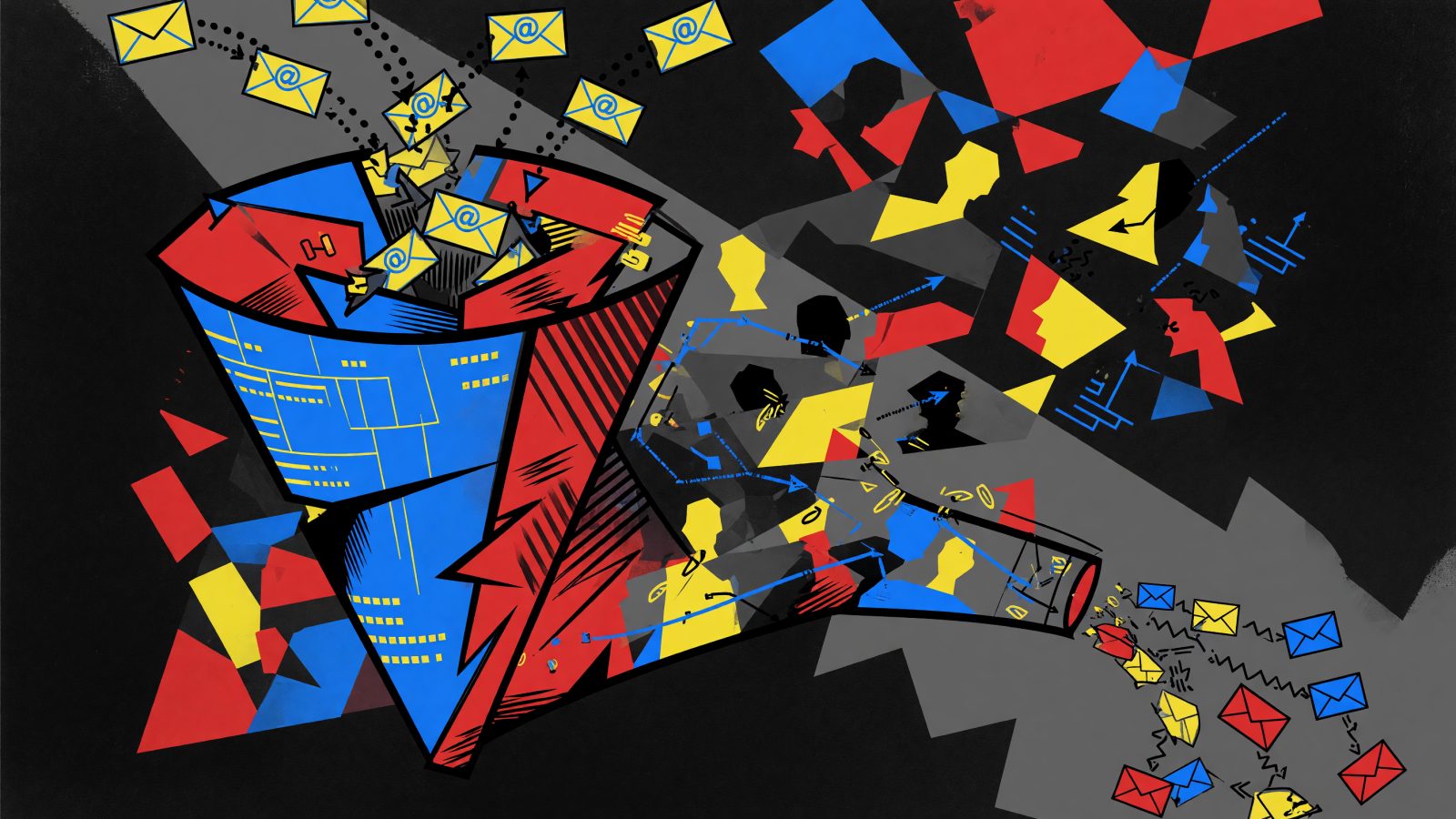
You know the drill. Someone signs up for your SaaS product. The welcome email fires. Then maybe a follow-up two days later. A third if you’re organized. But they’re the same emails everyone gets. The product manager from a 50-person team gets the identical “click here to create your first task” message as the freelance designer who just needs a simple kanban board.
Traditional onboarding sequences sit there like a museum exhibit—static, unchanging, built once and forgotten. And the numbers back up the failure: activation rates hover at 20-30% for most static sequences. That’s three out of four new users who sign up, look around, and disappear.
AI email SaaS onboarding changes the math completely. We’re seeing teams push activation rates up by 40% when they let AI read behavioral signals and adapt in real time. Here’s how to make it happen without building a data science department.
What AI Actually Changes About Onboarding Emails
Old-school onboarding was a timeline. Day 0: welcome. Day 1: setup guide. Day 3: feature highlight. Everyone got the same drip, regardless of what they actually did inside the product.
AI turns that timeline into a branching conversation. It watches what users click—and what they ignore—and adjusts the next message accordingly. A project management tool I work with built this into their flow. Their AI detects whether a new signup invited team members in the first 24 hours. Managers who haven’t invited anyone get an email with a pre-built team template and a one-click invite link. Team members who joined an existing workspace skip that entirely and get a task assignment walkthrough instead.
The difference isn’t subtle. The segmented AI-driven sequence pushed their Week 1 activation from 28% to 47%. That’s real money left on the table by the drag-and-drop email builder collecting dust in your ESP.
The mechanism is straightforward: AI ingests in-app event streams—clicks, time-on-page, feature toggles, drop-off points—and clusters users into dynamic personas like “power explorer” or “cautious evaluator.” No manual rules, no spreadsheets of if-this-then-that logic. You connect the pipes and the system learns.
Hooking AI Into Your Existing Stack
You don’t need to rip out your current tools. Most teams run some combination of a product analytics platform (Mixpanel, Amplitude, Segment) and an email service provider (Customer.io, Braze, HubSpot). The AI layer sits between them, pulling behavioral data on one side and pushing email triggers on the other.
Here’s a practical setup that works for mid-market SaaS companies:
- Event forwarding: Pipe raw event data from your analytics tool into an AI scoring engine via Segment’s integrations or direct API. Events include signups, feature clicks, time thresholds, and inaction signals like 72 hours of silence.
- Intent modeling: Tools like MadKudu and Oribi run machine learning on those events to score user intent and identify who’s likely to convert versus who needs hand-holding. High-intent users get streamlined sequences that push toward a trial conversion; hesitant users get deeper educational content before you ever ask them to upgrade.
- Real-time triggers: The AI listens for specific micro-behaviors. User opens the reports tab for the first time? Fire a 90-second explainer video in the next 10 minutes, not tomorrow.
A SaaS analytics company I talked to last quarter built this exact loop. Their AI detects when a user encounters a complex feature—like cohort analysis—and immediately emails a personalized walkthrough. Delay drops by 60% when the help arrives in context, not three days later in a generic newsletter.
Making Welcome Sequences That Adapt
The first 48 hours determine whether someone sticks around. AI lets you make those hours count by generating email content that shifts based on who the user is and what they’ve done.
Dynamic content generation is the most visible upgrade. NLP models like GPT-4 or Jasper can write subject lines, body copy, and CTAs that pull from user attributes. Sign up as a marketing lead? Your welcome email mentions campaign performance benchmarks. Sign up as an engineer? It talks about API response times. One team I followed tested AI-generated subject lines against their manually written ones and clocked a 20% lift in open rates—not from better copywriting, but from better relevance.
Timing matters just as much as words. Send Time Optimization, baked into platforms like Braze, analyzes each user’s past email engagement and delivers messages when they’re actually likely to open. Not your hunch about “Tuesday at 10am.” Click-through improvements of 15% show up consistently across implementations.
Dynamic sequencing closes the loop. If someone creates their first project within minutes of signing up, the AI skips the “getting started” tutorial email and jumps straight to advanced tips. If they stall on setup, it sends a 60-second video instead of a wall of text. Drop-offs from the onboarding flow shrink by roughly 25% when the sequence adapts instead of marching forward blindly.
Most teams also run constant A/B tests on autopilot. Set up an experiment in something like Optimizely connected to your email AI, and the system surfaces winning variants, kills losers, and reallocates traffic without a human touching anything. Hours of analysis turn into a notification on Slack.
Pushing Users Toward the Aha Moment
Activation isn’t a single event. It’s a series of small discoveries that add up to someone realizing they can’t live without your product. AI spots the moments when a nudge will land hardest.
Intent detection works at the micro level. A user hovers over the reporting button but doesn’t click. Maybe they’re overwhelmed. An AI-triggered email that says “Here’s a 2-minute video on building your first report” turns hesitation into action. I’ve seen feature adoption climb 30% just from well-timed 90-second walkthroughs attached to these intent signals.
Milestone emails become genuinely celebratory when they’re personal. “You’ve completed 10 tasks—here’s a power-user tip for keyboard shortcuts” lands differently than a generic congratulations. When one task management SaaS added dynamic milestone emails with next-best-action suggestions (“Try connecting your calendar to unlock time blocking”), users who hit the milestone were 35% more likely to adopt the suggested feature within a week.
Behavioral clustering makes cross-sells natural instead of annoying. Users who gravitate toward collaboration features get emails about team permissions and guest access. Users obsessed with reporting get messages about advanced dashboard filters. Nothing feels forced because the AI groups people by actual behavior, not by the persona someone guessed at in a marketing meeting six months ago.
Spotting the Users Who Are About to Leave
The most expensive thing in SaaS isn’t acquisition—it’s churn you could have prevented.
Predictive models turn your historical data into an early warning system. Feed the AI a mix of signals: days since last login, declining feature usage, number of support tickets, team invite activity. The model spits out a churn risk score that’s accurate enough to act on—often hitting 85% precision on high-risk predictions after enough training data. Users above the threshold automatically enter a re-engagement sequence.
What goes into that sequence? AI-generated incentives based on past behavior. Someone who used reports heavily but went quiet gets a list of three advanced reporting features they haven’t tried yet, with one-click links to each. Someone who hit a usage ceiling mid-trial gets a personalized discount offer with a short window.
A B2B SaaS company I studied applied this to their “we miss you” emails and saw a 15% reduction in monthly churn. The AI pulled content suggestions from the user’s actual activity history, so the email read like a colleague’s recommendation, not a desperate please-come-back blast.
Platforms like ChurnZero and Gainsight PX package this into playbooks: behavioral scoring plus automated email triggers for each risk tier. You define the thresholds and the guardrails, the AI handles the rest. Proactive retention stops being a manual slog and becomes an automated safety net.
Start Small, Then Scale
You don’t need to wire up every signal on day one. Pick one segment, one trigger, and one adaptive email. Connect your product analytics to your ESP for that single path and watch what happens when the AI learns. The activation lift will show up fast—usually within a few weeks of data accumulation—and that proof buys you the space to build out the rest.
The teams winning at AI email SaaS onboarding aren’t the ones with the biggest budgets. They’re the ones who connected the pipes earlier than everyone else and let the system learn.
Keep reading
AI-Powered Email Marketing for Influencers: Automate Fan Engagement and Sponsorship Deals
AI-Powered Email Cross-Sell Automation: Turn One Purchase into a Bundle of Revenue